Repealing Railways!
Repealed legislation a reminder of what was, and what might've been

The Parliamentary Counsel Office (PCO) has announced its third tranche of legislation to be repealed as part of its Legislative Repeals Project to generally tidy up the New Zealand statute books. Most of the media attention on this project has focused on the very odd legislation this project proposing parliament repeal, such as an Act that bans trim milk in Wellington city. The office is now seeking feedback on the proposed repeals, which you can provide via their website.
What’s interesting to me is that many of the Acts proposed for repeal are a time capsule of law created for many different railway and tramway projects across the country, many of which were private railways. Back in the day, each railway had an authorisation Act, which means there are quite a few of these enactments on the books, almost all of which are no longer applicable.
The Acts include significant Acts in the history of New Zealand’s railways, its transport and development generally. A lot of them are “local” Acts, in that they only apply for a specific geographic areas, so haven’t been generally listed in statute books. They also include some real oddities. Here’s a run-down of the Acts proposed for repeal and some interesting tidbits...
All aboard The Hot Lakes Express
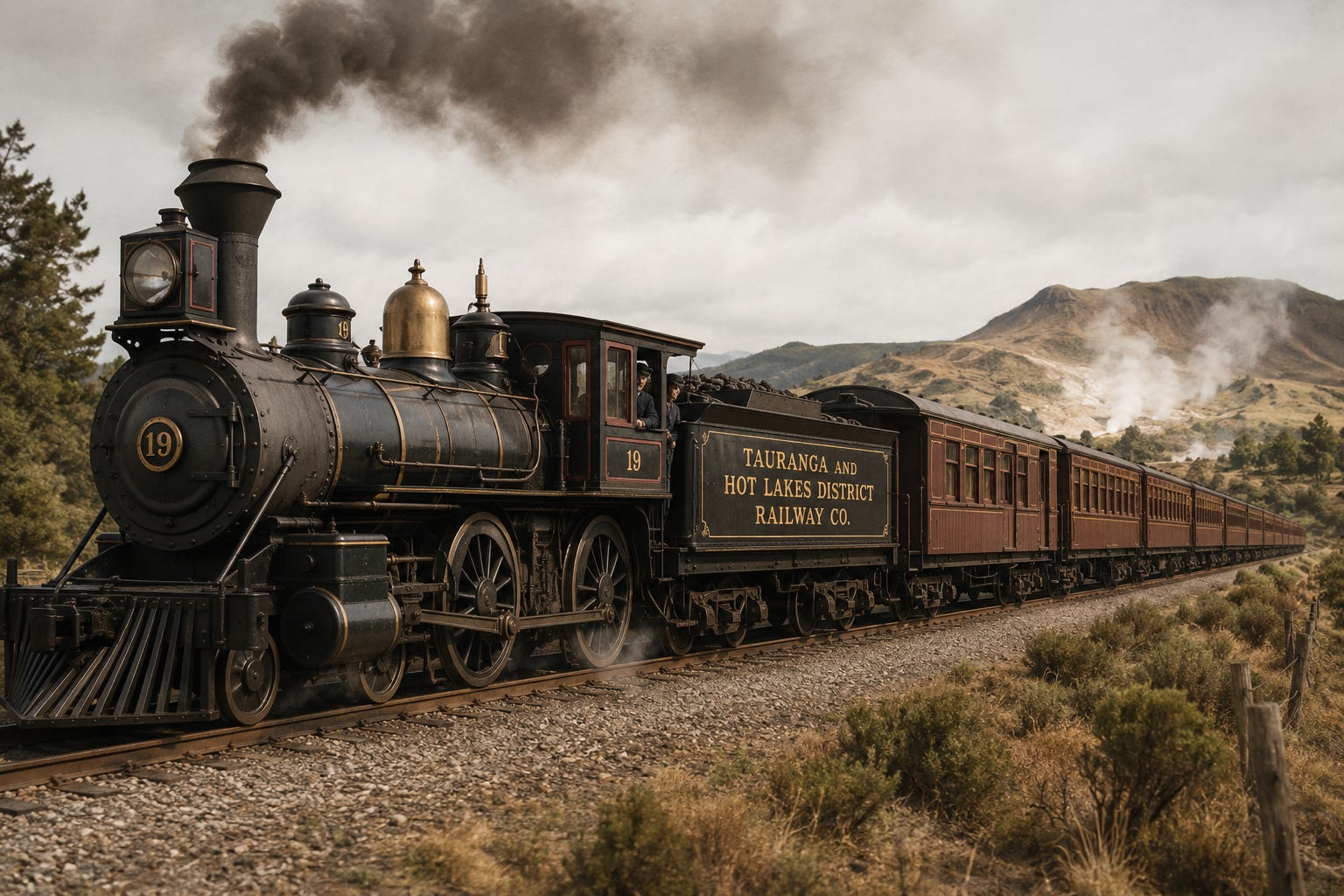
In the first tranche of proposed repeals, an obscure local Act entitled the “Tauranga East Coast and Hot Lakes District Railway Company (Limited) Empowering Act 1882” is up for repeal.
Yes, you read that correctly. A proposed railway to be known as the “Tauranga and Hot Lakes District Railway” existed, at least on paper. No prizes for guessing where this railway line was meant to have run.
Dating from 1882, this Act was to:
“…authorize the said Company to construct the said railway over that part of the tidal waters of the Harbour of Tauranga which is shown on the said plan, and across the River Kaituna and the river connecting Lake Rotoiti with Lake Rotorua”
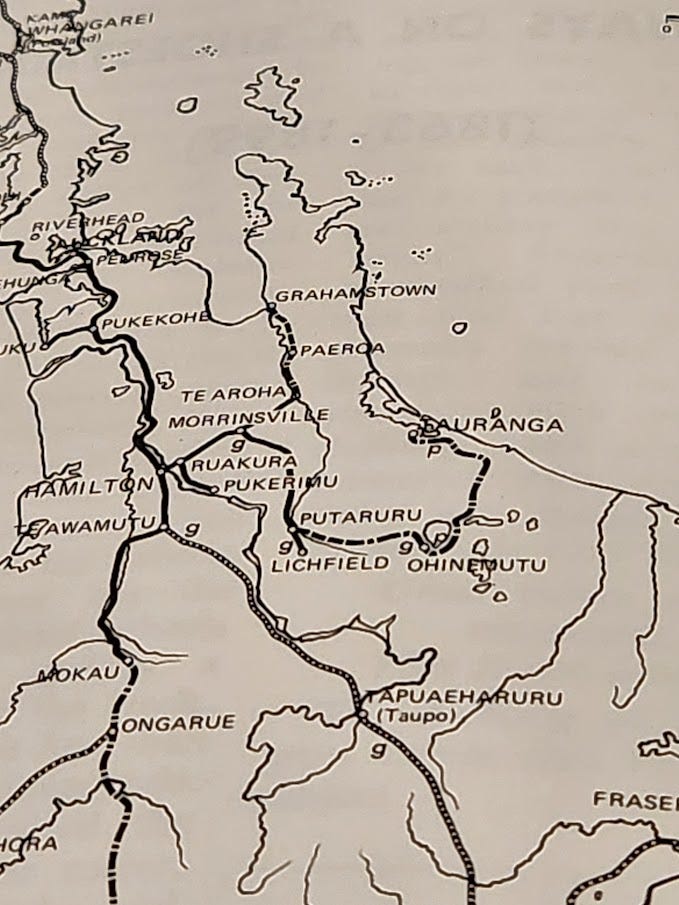
So, a railway from Tauranga, across the harbour to the “Hot Lakes District” aka the Rotorua district. This is a railway line from Tauranga to Rotorua which is listed in Gordon Troup’s Steel Roads of New Zealand.
The Act was a product of “The Railways Construction and Land Act 1881”, the same Act of Parliament that authorised a number of other private railways in New Zealand, the most well-known being the Wellington and Manawatu Railway Company’s Wellington - Longburn railway line, which was our most successful private railway, and the not-so-successful New Zealand Midland Railway Company, who wanted to connect Nelson with the West Coast and the West Coast with Canterbury.
The Railways Construction and Land Act largely came about because the colonial government at the time didn’t have the money to build all the railways it wanted, and due to a recession, it had limited borrowing capacity. What it did have, thanks to confiscations and other skullduggery, was a lot of land. And as the incentives for the transcontinental railroad in the United States had proven, building railways was a great way to increase land values and therefore pay for railways. Basically, the government would contract a private company to build and operate a railway line (which had to be completed within 5 years of contracting with the government), and in exchange, the company would get a bunch of land, with the added incentive that an operating railway tended to greatly increase the value of the land it ran next to.
As mentioned above, this only really worked for the Wellington and Manawatu Railway Company. In the case of the Midland Railway Company, the government took ownership of the incomplete railway, and (following some lengthy litigation) eventually completed the Midland line to connect the West Coast and Canterbury. Sadly, the line to Nelson was never finished, and the isolated Nelson section was closed in 1955.
Back to the Hot Lakes District Railway, the PCO notes dryly in its comments about the legislation to be repealed:
The company no longer exists, and it appears that it failed to raise the capital to carry out the work.
As the PCO correctly notes, modern legislative frameworks mean you don’t need to pass an Act of Parliament for every single section of railway track.
In the event, another company - the Thames Valley and Rotorua Railway Company - started a line, from Morrinsville, but only got as far as Tirau before running out of money. The government then completed the line to Rotorua, which technically has never closed, although has been out of use since 2001.
Next up is the Port Ahuriri-Westshore Road And Railway Act 1914. Nowhere near as interesting as the Hot Lakes District Railway, this local Act simply authorises the construction of roads and railways in Napier. This railway still exists; it’s the line into Port Napier aka Ahuriri, which is now KiwiRail’s main base of operations in Napier.
Then there’s an Act authorising the construction of a tramway in Thames. Thames had a street tram system, oddly, before this Act came into being. It appears as though the Thames Borough Council had a dispute over ownership of the tramway, the track for which wasn’t removed until 1884.
Finally, there’s the Wellington and Manawatu Railway Company’s Additional Capital and Debentures Validation Act 1886. As mentioned above, the Wellington and Manawatu Railway Company was far more successful than the Hot Lakes District Railway, and in 1886, Parliament gave the W&MR the all clear on capital raising it had recently completed. According to Ken Cassell’s excellent book on the W&MR, Uncommon Carrier, this Act was really just a tidying-up exercise, as it was unclear under the original Act of Parliament whether W&MR could raise more capital in this way (it had been authorised to raise a certain amount under the original Act, which was silent on further capital raisings).
The ORB’s final act
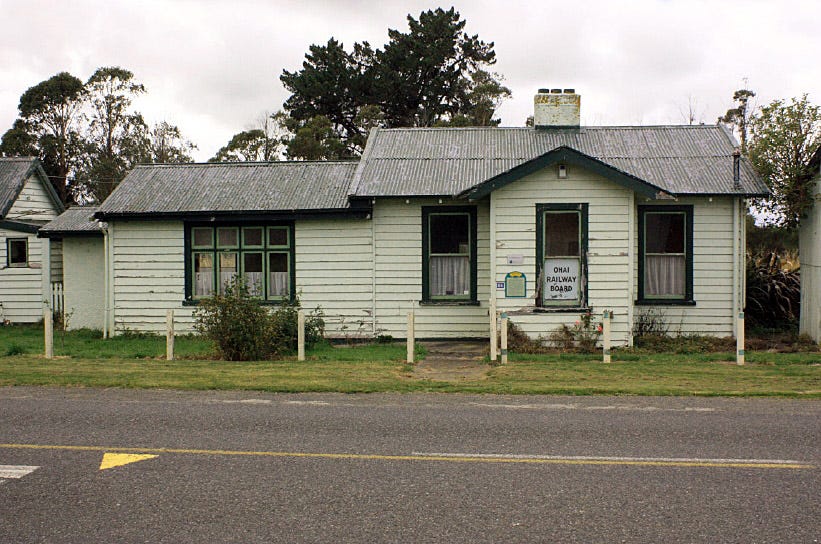
The second tranche of repeals only includes one Act of Parliament of much significance to railways: the Ohai Railway Board Act 1932. The Ohai Railway Board (ORB) was a private railway that extended from New Zealand Railways network at Wairio to the coal fields of Ohai. It’s fitting that its empowering Act is now to be repealed, since the Ohai railway line itself has only just recently closed, with the coal mine(s) that have kept it open now all ending production.
I say “private” railway, in fact the ORB by 1932 was a collection of state and local agencies - the state coal department (the main customer), county council and (originally at least) local farmers. For that reason, when local government amalgamation occurred in 1989 (yes, it’s not our first rodeo!), one of the ORB’s owners effectively ceased to exist.
The corporatised state coal department (CoalCorp) didn’t want to own the railway either, and so NZR took over running trains to Ohai in 1989, and formally purchased the line and its rolling stock in 1991, which became part of the new-fangled New Zealand Rail Limited. The proceeds from this sale went into a local trust, the Ohai Railway Fund, that makes grants to the local community to this day.
Once were land bankers
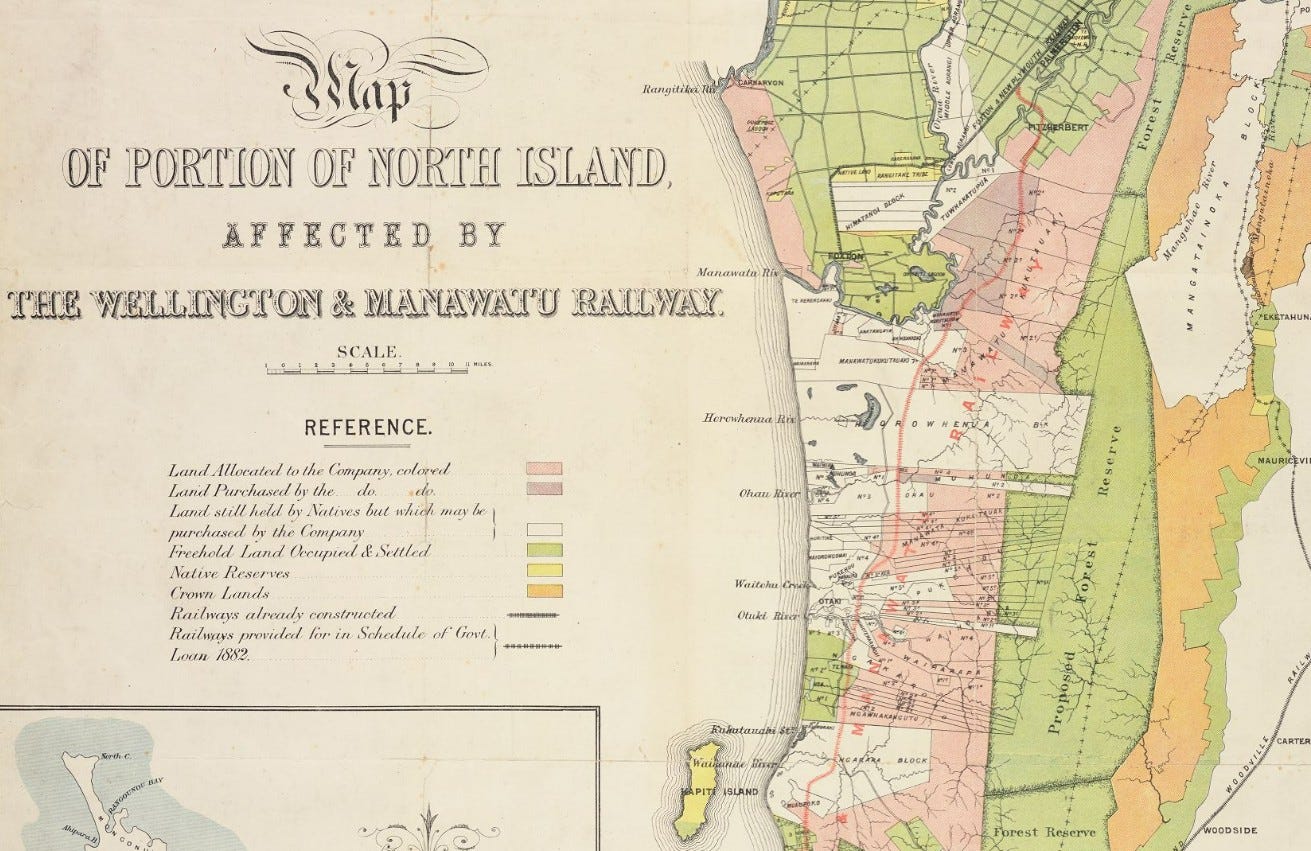
As I mentioned earlier, the private Wellington and Manawatu Railway Company succeeded where others failed: a profitable, innovative railway that greatly improved land values in the districts it operated in. This was largely thanks to the government generously granting land to the company to fund its operation. The company then sold it off at substantial profit, thanks to the improved value of the land due to the existence of… the Wellington and Manawatu Railway Company.
So it’s fitting in the third tranche of repeals includes the Act that Parliament passed in 1908 to nationalise the W&MR. The company and its shareholders had done well, but the government wanted the line as part of the soon to be completed North Island Main Trunk. And so it was - the Act is “essentially a contract” which lists all the parts of the company the government purchased. And so, the W&MR was no more.
Or was it? The PCO’s description of the Act and why it should be repealed contains one tantilising detail:
Despite the Company ceasing to exist, there is one land title remaining in the name of the Company. We propose that the repealing legislation confirm this remaining land title is transferred to the Crown.
The W&MR lives on! I wonder where the land title in question actually is. As you can see from this map held by Digital NZ, the railway was quite obviously intended to enable the purchase of Māori land. So it’s entirely possible that the land title in question is subject to a Treaty of Waitangi claim.
It will be fascinating to see what else crops up as legislation to be repealed.
It’s probably a steep bit of land that looked good on a paper map. Apparently , there are a few miners sections left in the Karangahape gorge , with no traceable owner descendants found. Some have speculated you could employ squatters rights on them , but again I would say they are forgotten because they are unusable. Did the private railways pay rates??? if , so the arrears would probably mean the council can now own it.
I did a search of the land registry.
Wellington and Manawatu Railway Company owns a 1.4ha block in the mountains east south east of Otaki. Wellington and Manawatu Railway Company Limited, removed from the company registry in 2014, owns a 10,000ha block east of Otaki, but that is listed as part cancelled and a lot of that land has been transferred to other owners. Both blocks a long strips of land that you might expect to adjoin railway lines.